Automate the process you can describe, not the one you wish you had
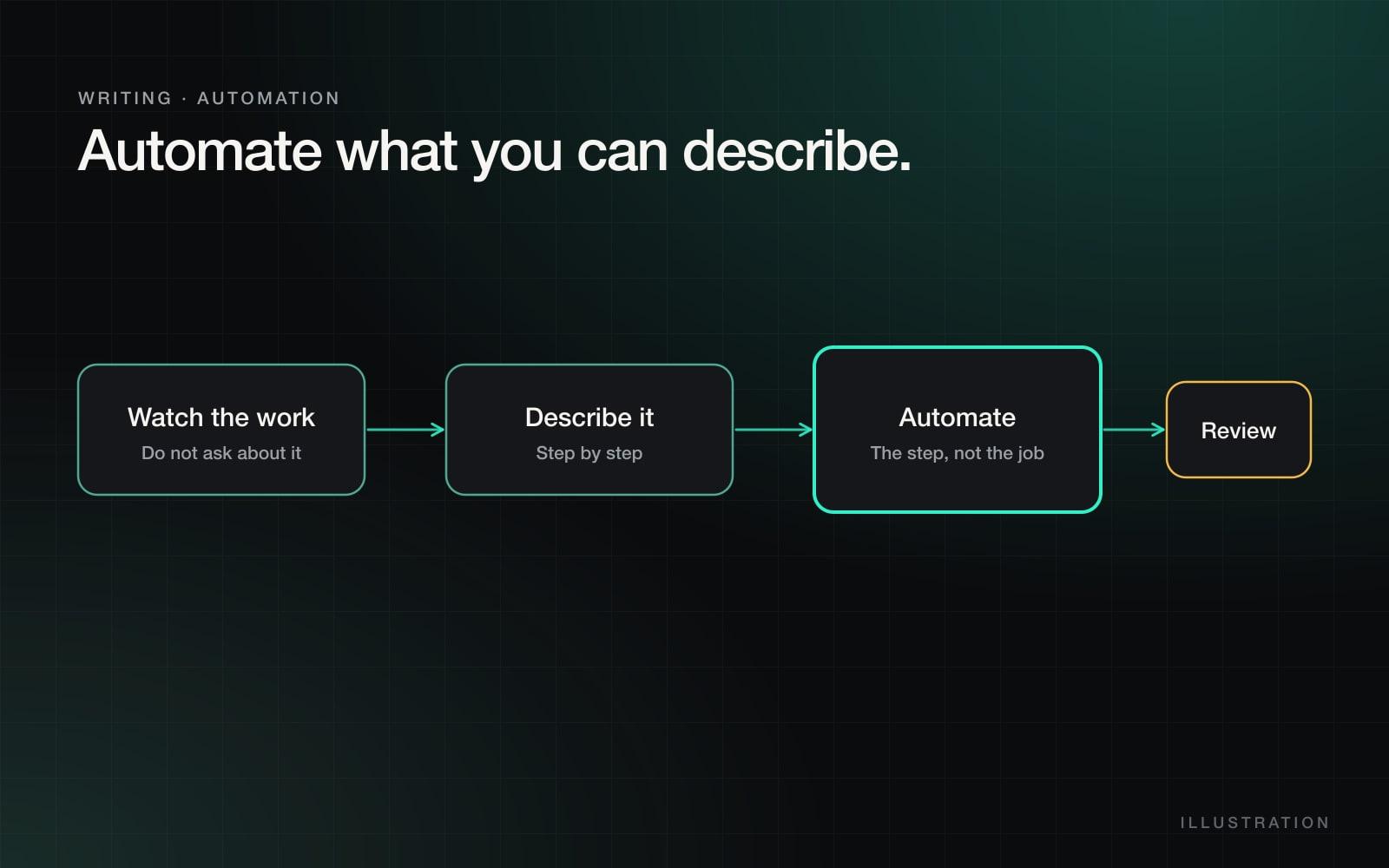
Every automation project starts the same way. Someone describes a clean, five-step process. Three weeks later you find out the real process has eleven steps, two of which only one person knows about, and one of which exists because of a customer complaint nobody remembers.
The engineering is rarely the hard part. The mapping is.
I have built internal systems for teams of five and teams of two hundred and fifty, and the projects that failed did not fail because the code was wrong. They failed because we automated a process that did not exist outside a slide.
Watch the work, do not ask about it
There is a gap between how people describe their job and how they do it, and it is not dishonesty. It is that the workarounds have become invisible. Nobody mentions the spreadsheet they have opened every morning for four years, the same way nobody mentions breathing.
So do not hold a meeting about the process. Sit with the person while they do it, with their actual tabs open, and write down every step, including the ones that are mildly embarrassing:
- the export that gets re-keyed into another system
- the message that is really an approval
- the file named
final_v3_USE_THIS.xlsx - the step that only runs when a particular person is in the office
That document is the specification. Anything you automate before you have it is a guess with a budget attached.
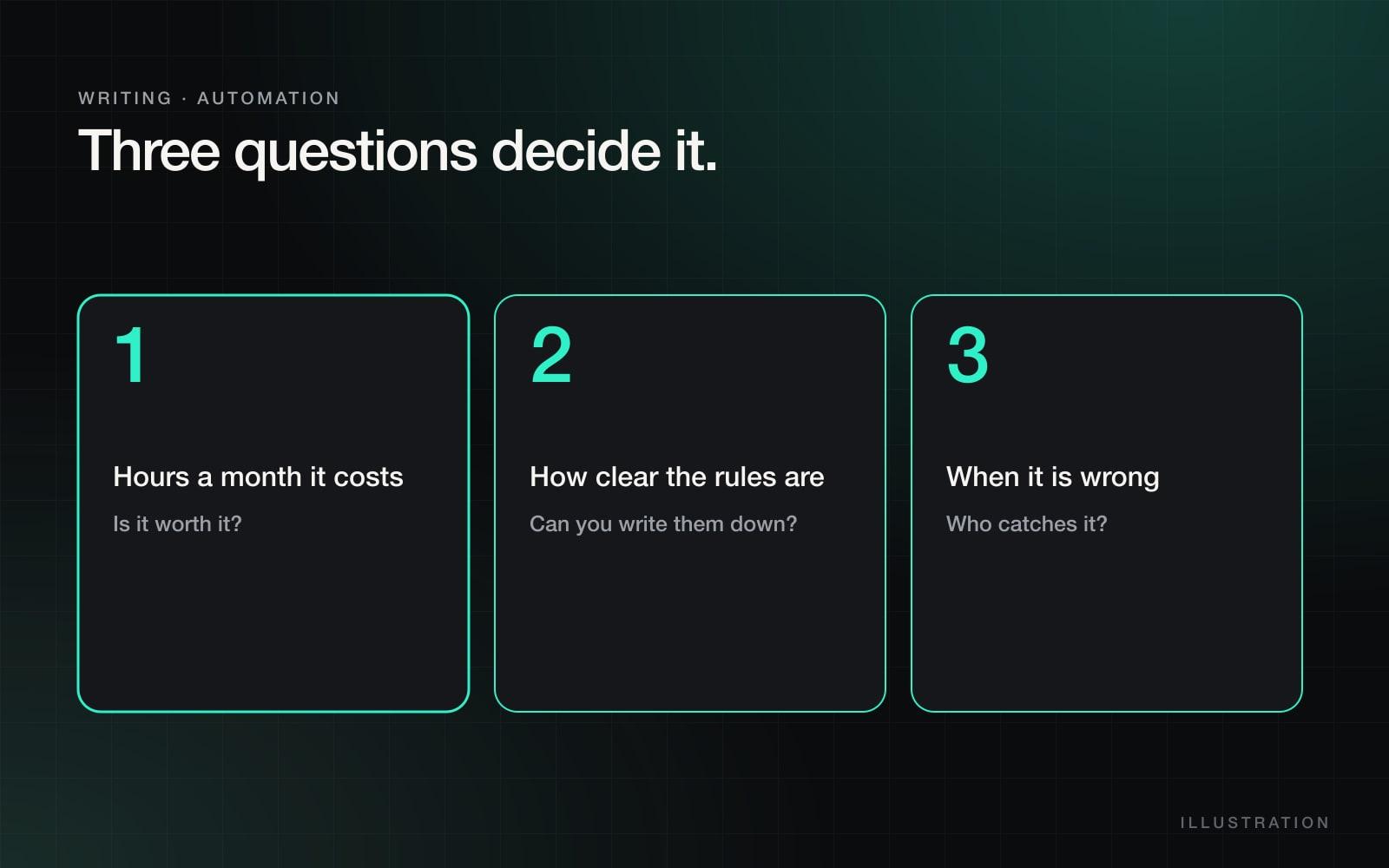
Three questions that decide what to automate
Not every manual step is worth removing. Once the map exists, run each step through three questions, in this order.
1. How many hours a month does it cost?
Count it before you touch it. Rough is fine: "about two days a week across three people" is a usable baseline. If nobody can estimate the time, that is itself a finding, it usually means the step is scattered across so many people that no one owns it.
2. How clear are the rules?
A step where the answer is always derivable from the input is a candidate for straight automation. A step where two experienced people would disagree is a candidate for assisted work, a draft the human approves, not for removal.
3. What happens when it is wrong?
A wrong invoice line is a correction. A wrong payment is a phone call with your bank. The cost of a mistake decides how much review the step needs, and review is what makes automation survivable.
The steps worth doing first score high on hours, high on clarity, and low on blast radius. That is usually two or three steps out of eleven, and they are where most of the time is hiding.
Automate the step, not the job
The instinct is to replace the whole workflow. The better move is to take the single step that scores highest and remove that one.
You get a result in weeks instead of quarters. The team sees something real instead of a roadmap. And crucially, you learn how wrong your map was while the project is still small enough to correct.
The project that tries to automate eleven steps at once discovers its mapping errors in month five, with a budget already spent.
Keep a human where judgement lives
The goal is not an empty office. It is that the people doing the work spend their day on the part that needs a person.
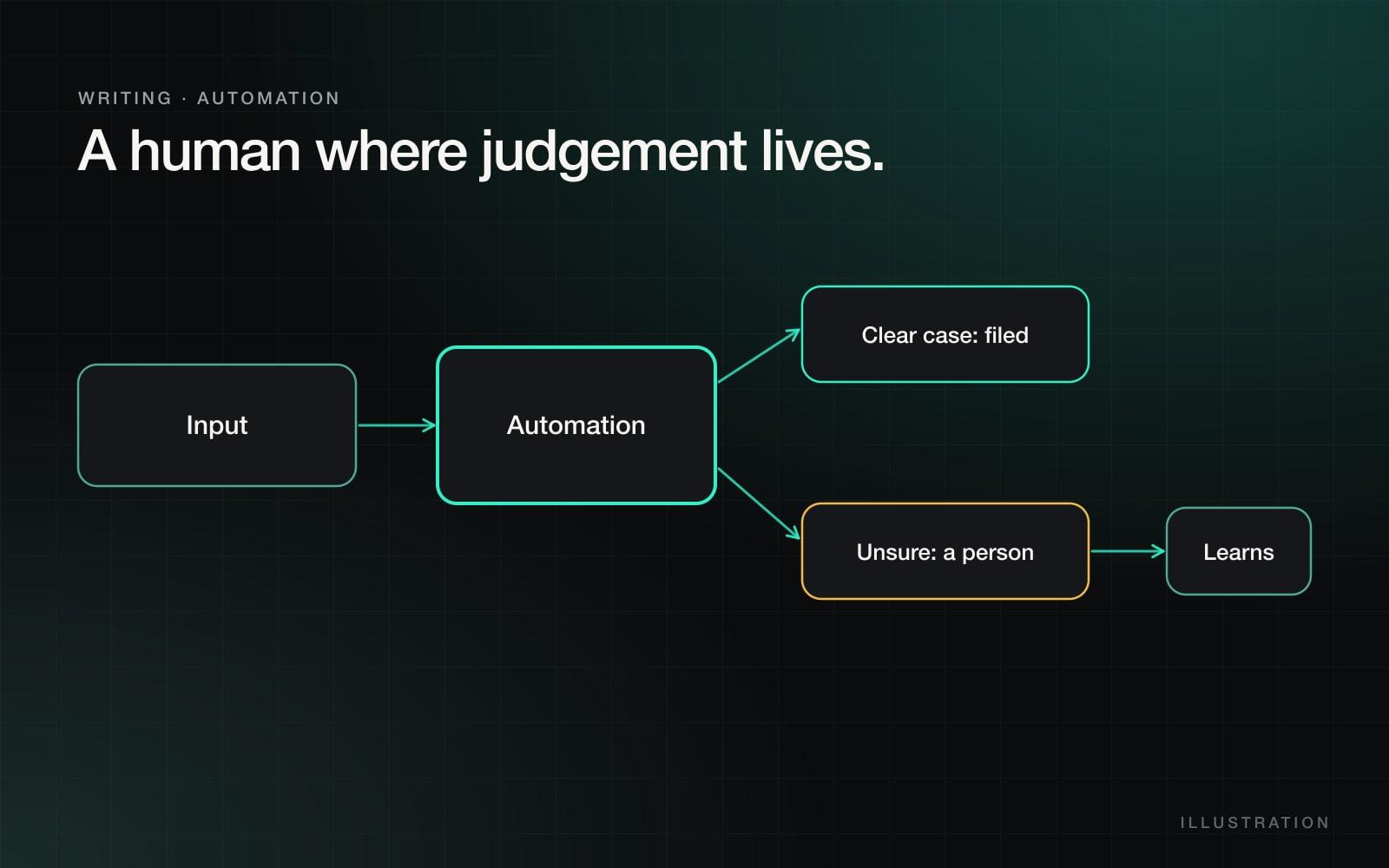
The pattern that works:
- the system handles the clear majority automatically
- anything ambiguous goes to a review queue, with the reasoning attached
- every correction a reviewer makes is captured, because that is your test set
On one agent build this is exactly what removed around a hundred hours a month of manual data work: the agent did not replace the reviewers, it stopped sending them the obvious cases.
Measure before, measure after
If you cannot say how many hours the process takes today, you cannot prove anything changed. You will also lose the argument in six months when somebody asks what the project was for.
Record three numbers before you start:
Hours
Time the process costs per month
Volume
Items handled per month
Errors
How often it has to be redone
Then record the same three, the same way, sixty days after launch. Not a survey about whether people feel it is better, the same three numbers.
The uncomfortable part
Sometimes the honest answer is that the step should not be automated. It should be deleted. A surprising share of manual work exists because of a decision made years ago for a reason that no longer applies, and automating it just makes the wrong thing happen faster and more reliably.
Mapping finds those too. That is the second-best outcome of this whole exercise, and it costs nothing to act on.
If this sounds like a process in your business, book a call and we will map one together. Thirty minutes, and you keep the map whether or not we work together.