Shopify storefronts for US DTC brands: 2× to 3× sales lifts
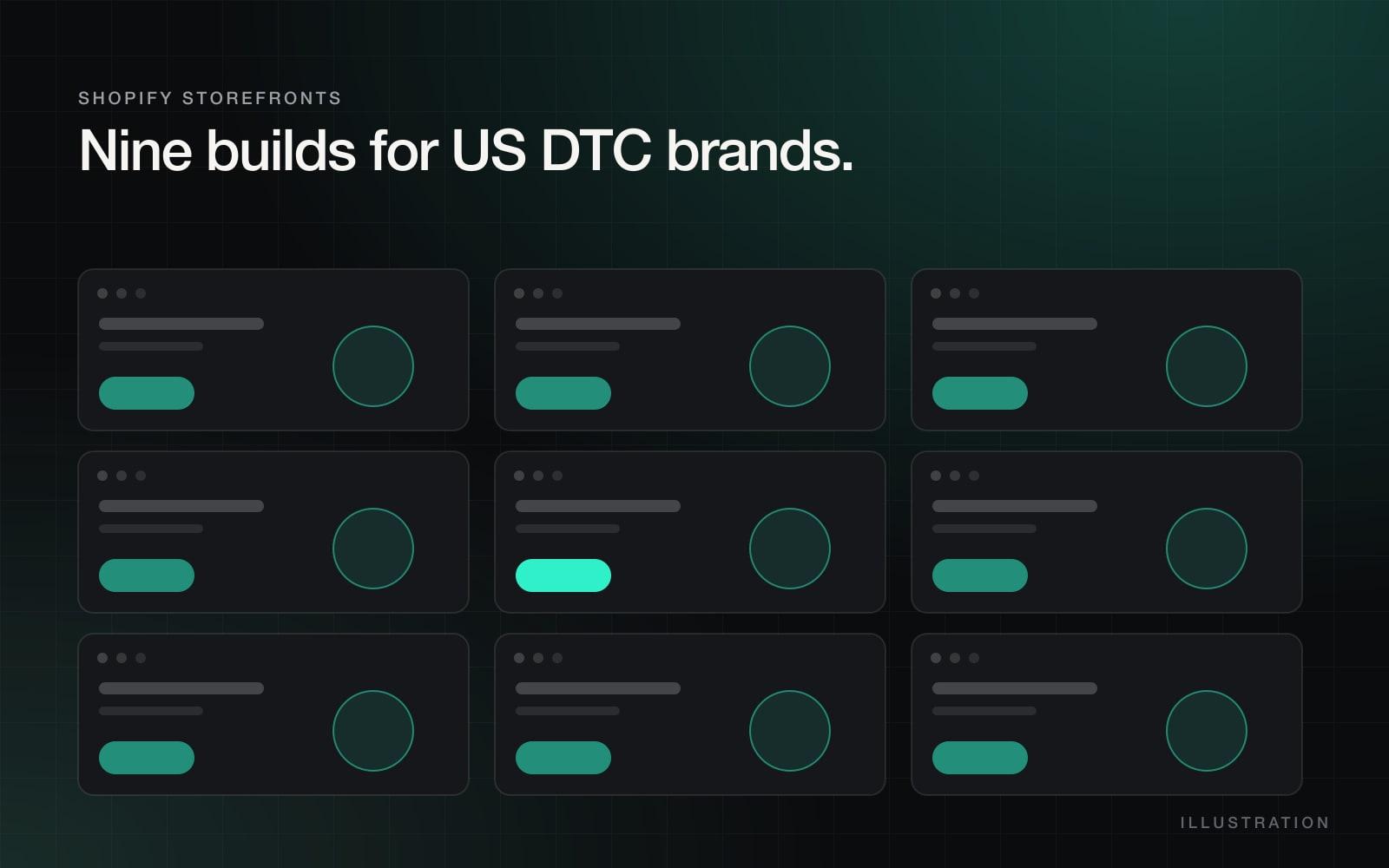
Nine storefront builds for US beverage, wellness and fitness brands. Subscriptions, flavour discovery and checkout work, with the client-reported result on each one.
For Shopify brands
I remove the manual work between your Shopify store, your apps, your 3PL and your spreadsheets, so growing sales does not mean growing the ops team.
17+
Shopify stores operated
40+
Web properties managed
10years
Inside e-commerce operations
~100hrs/mo
Manual work removed by one agent
Sound familiar?
None of these show up in your P&L as a line item. All of them are paid for in hours.
Someone exports orders to a spreadsheet every morning before anyone can start work.
Inventory is right in Shopify, wrong in the 3PL, and nobody notices until a customer does.
Returns and exchanges are handled by hand, one email thread at a time.
The daily numbers meeting starts with twenty minutes of pulling the numbers.
Launching another store means hiring another person to run it.
Your apps each solve one step, and the hours disappear into the gaps between them.
Where the hours go
Three places the time disappears in almost every brand I have worked inside.
Every ops team has one task that has to finish before anyone else can start. It looks like twenty minutes. It is twenty minutes plus the time the rest of the team spends waiting, every working day, forever.
Most brands do not have an app problem, they have a dozen apps that each solve one step well. The hours live in the exports, the re-keying and the checking that joins them together, and no app vendor is going to fix that for you.
If running a store takes a fixed amount of human attention, then store number four costs four times store number one. That is the ceiling most portfolios hit, and it is a systems problem rather than a hiring one.
The deliverable
That is the whole idea: exception-based operations. Everything else is implementation detail.
Today
After
What I build
Everything below ends up in production and is handed over with documentation.
Store, apps, 3PL and marketplaces kept in sync automatically, with alerts when something does not match instead of a daily manual check.
One source of truth for stock and product data across stores, so a price or stock change happens once rather than seventeen times.
The repetitive parts of returns, exchanges and support triage handled automatically, with humans on the cases that actually need judgement.
The numbers your team opens Shopify for, delivered every morning across every store, in one place, before the meeting rather than during it.
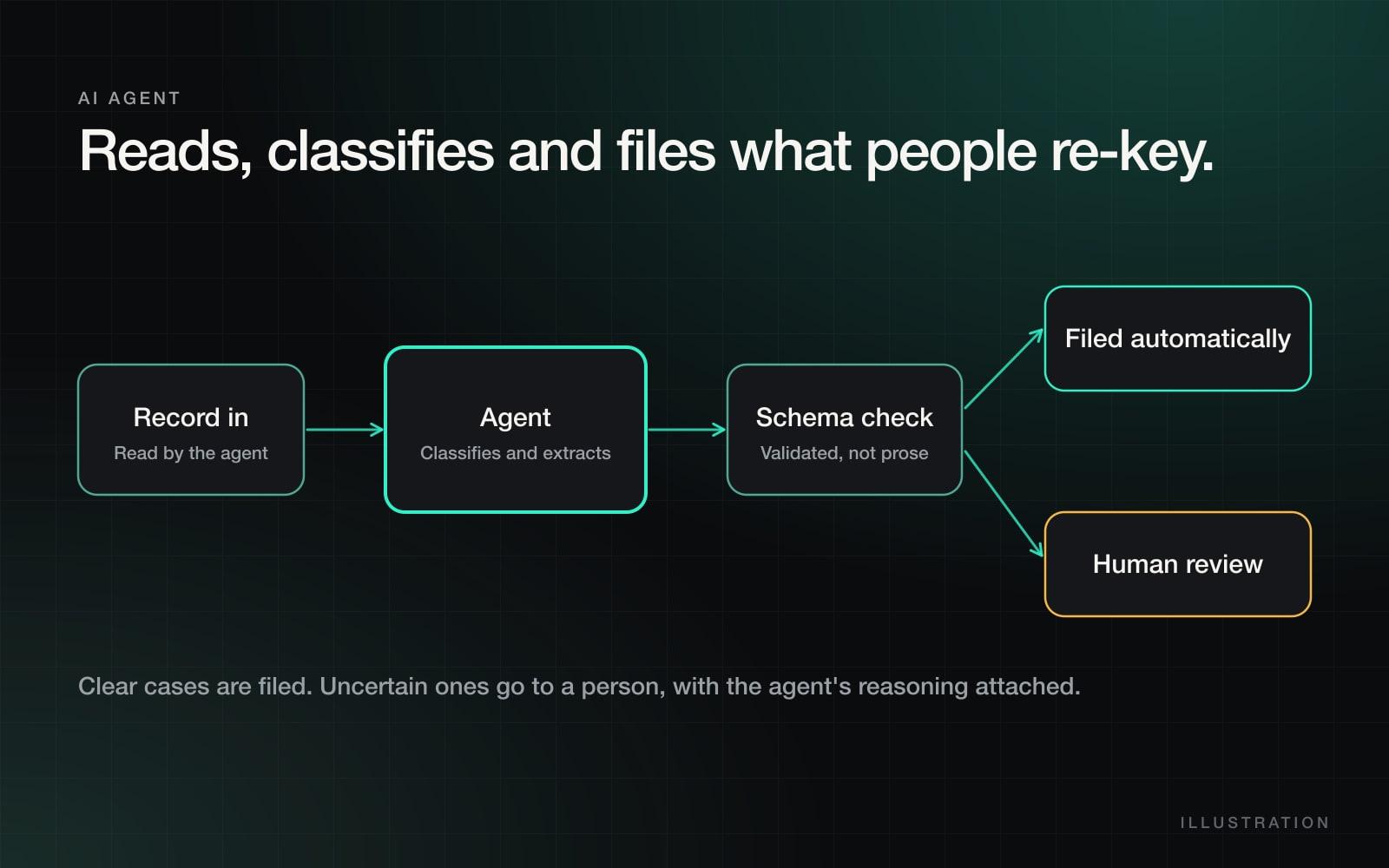
Reading, classifying and filing the records your team copies by hand, with structured output that is validated before it saves and a review queue for anything ambiguous.
Exception-based operations: the day starts with what broke, not with a checklist of things that were fine.
A typical sprint
Indicative, not a template, the order comes from your map, not from mine.
I watch the work being done and write down every manual step, ranked by what it costs you per month.
The highest-cost, clearest-rules step goes live with real data, running alongside the manual process until it is trusted.
The next step automates, and monitoring goes in so exceptions reach a person instead of sitting silently.
Documentation, a walkthrough with your ops team, and two weeks of close support while it beds in.
Scope of one automation
A script running on somebody’s laptop is not a deliverable. If any of these is missing, the work is not finished.
Be honest about it
If a $29/month app solves it properly, buy the app. I will tell you that on the call rather than after the invoice.
| This engagement | Another app | Hire an ops person | |
|---|---|---|---|
| Fixes the gaps between tools | That is the whole job | No, solves one step | Yes, by hand, every day |
| Cost shape | One-off build, small running cost | Monthly, per app, forever | Salary, forever |
| Scales to the next store | Reused, near zero extra cost | Another subscription | Another hire |
| Time to working | 2–4 weeks | Same day, if it fits | Weeks to hire, months to train |
| Knows your actual process | Mapped before anything is built | Generic by design | Yes, and it leaves with them |
| Handles exceptions | Routed to a person with context | Usually fails silently | Yes |
| Best when | The same work repeats every week | A standard, isolated need | Work needs judgement, not typing |
Proof

Nine storefront builds for US beverage, wellness and fitness brands. Subscriptions, flavour discovery and checkout work, with the client-reported result on each one.

A review-backed agent that reads, classifies and files the records a team used to copy by hand, with a human check on anything it is unsure about.
Getting started
Days 1–5
I sit with whoever does the work and watch it happen. You get a ranked list of manual steps with hours attached, yours to keep either way.
Days 5–7
We agree which step goes first, and you get a fixed price and a fixed date before any code is written.
Days 7–30
The first automation runs in production alongside the manual process, gets corrected against real exceptions, then takes over.
Investment
That is the starting point for a 2–4 weeks sprint. You get a fixed quote after the audit, before anything is built, and the audit is worth having even if you stop there.
What you get
Included
In their words
Every quote below is a verbatim client review from my Upwork profile, named wherever the client's name is on record.
“Tayyab has done an outstanding job, developing the entire company’s internal system and even securing and automating it. The dedication was amazing as well as the communication. We are pleased and highly recommend his services. He is our continuous web partner for the past 4 years”
Taam Zo, Amazify · 2024
“Working with Tayyab for the third time has been a consistent pleasure. He is a highly professional and reliable freelancer who delivers exactly what is required. Tayyab is exceptionally communicative, friendly, honest, and thorough in his work. We have engaged his services multiple times for two of our websites, and he has always provided excellent support, including post-project assistance. He is a trusted partner, and we look forward to future collaborations.”
Panndy Chin, Multiple product group owner · 2026
“Tayyab is the most reliable person. Very knowledgeable and trustworthy. I have worked with other people before but I just feel lucky to count with his extraordinary work and ethics”
Jonathan Edgar, CRYPT · 2024
Top Rated
Top 10% of talent on Upwork
53
Jobs completed
37
Client reviews
10
Years on Shopify and WordPress
Questions
Not usually. My work is the operations layer behind the store, the systems, integrations and automations that decide how much manual work a sale creates. If a small private app is the right way to do that, I will build it.
Most brands have a dozen apps that each solve one step. The hours go into the gaps between them, the exports, the re-keying, the checking. That is what I remove, and I will happily keep every app that is already earning its place.
The first automation is usually live within two to four weeks. I deliberately start with one process rather than a full programme, so you can judge the work before committing to more.
A staff account with the narrowest permissions the work needs, plus access to whichever app or 3PL is involved. Credentials stay yours, and I document exactly what was used so you can revoke it the day we finish.
Everything runs in parallel with the manual process until it has proved itself on real data, and anything ambiguous is routed to a person rather than guessed at. Silent failure is the thing I design against first.
Both. Portfolios benefit most, because the same automation is reused across stores, that is how a team keeps 17+ stores running without 17 people.
Integrations are built against supported APIs and monitored, so a change surfaces as an alert rather than as a silent gap. Handover includes what to watch and what to do if something stops reporting.
I work with US brands with deliberate morning overlap. You deal with me directly, there is no account manager in between.
Next step
Thirty minutes. We map it together and you leave knowing what it would take to automate, whether or not you hire me.