Shopify storefronts for US DTC brands: 2× to 3× sales lifts
Nine storefront builds for US beverage, wellness and fitness brands. Subscriptions, flavour discovery and checkout work, with the client-reported result on each one.
One system replacing a decade of parallel spreadsheets at Amazify, built module by module across 18 departments without stopping the business, and maintained as their web partner for four years since.
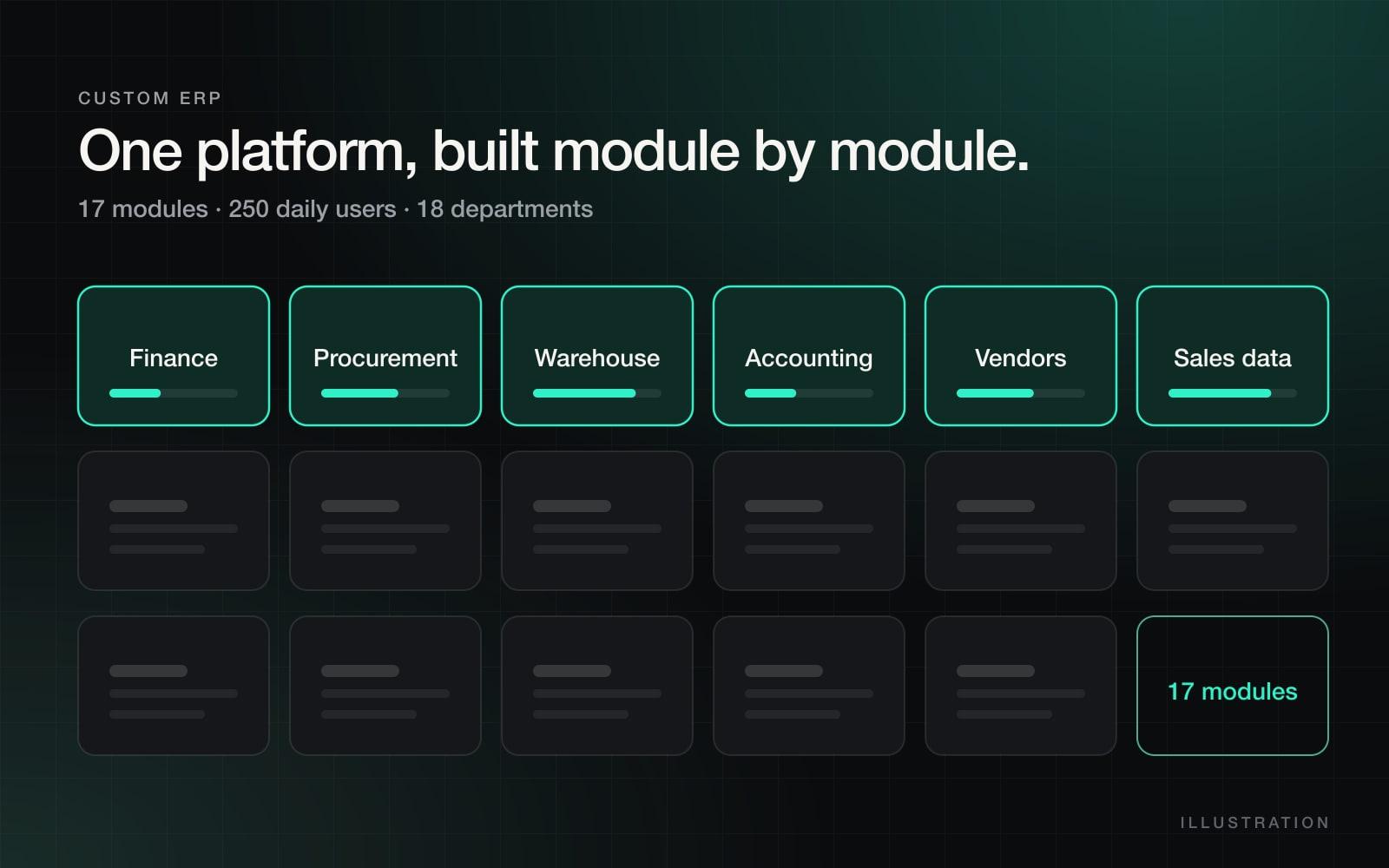
Amazify had eighteen departments, each running on its own spreadsheets, shared drives and inboxes. Every number existed in three places and nobody could say which one was true. Month-end meant reconciling files by hand, and any question that crossed two departments needed a person to go and ask.
The business did not need "an ERP" in the abstract. It needed its own processes to stop depending on who happened to be at their desk.
A single internal platform, delivered as 17 modules, one department-facing workflow at a time, in the order the pain was worst. Each module replaced a specific set of spreadsheets rather than a textbook process, so adoption did not require anyone to relearn their job.
Across the platform:
The modules cover finance, procurement, warehouse management, accounting, vendor management and sales data, among others, each one replacing either a set of spreadsheets or a paid tool.
Shipping 17 modules at once would have failed. The rollout was sequenced:
Each department went live with its own training and a short written guide, so support questions dropped off quickly instead of landing on one person forever.
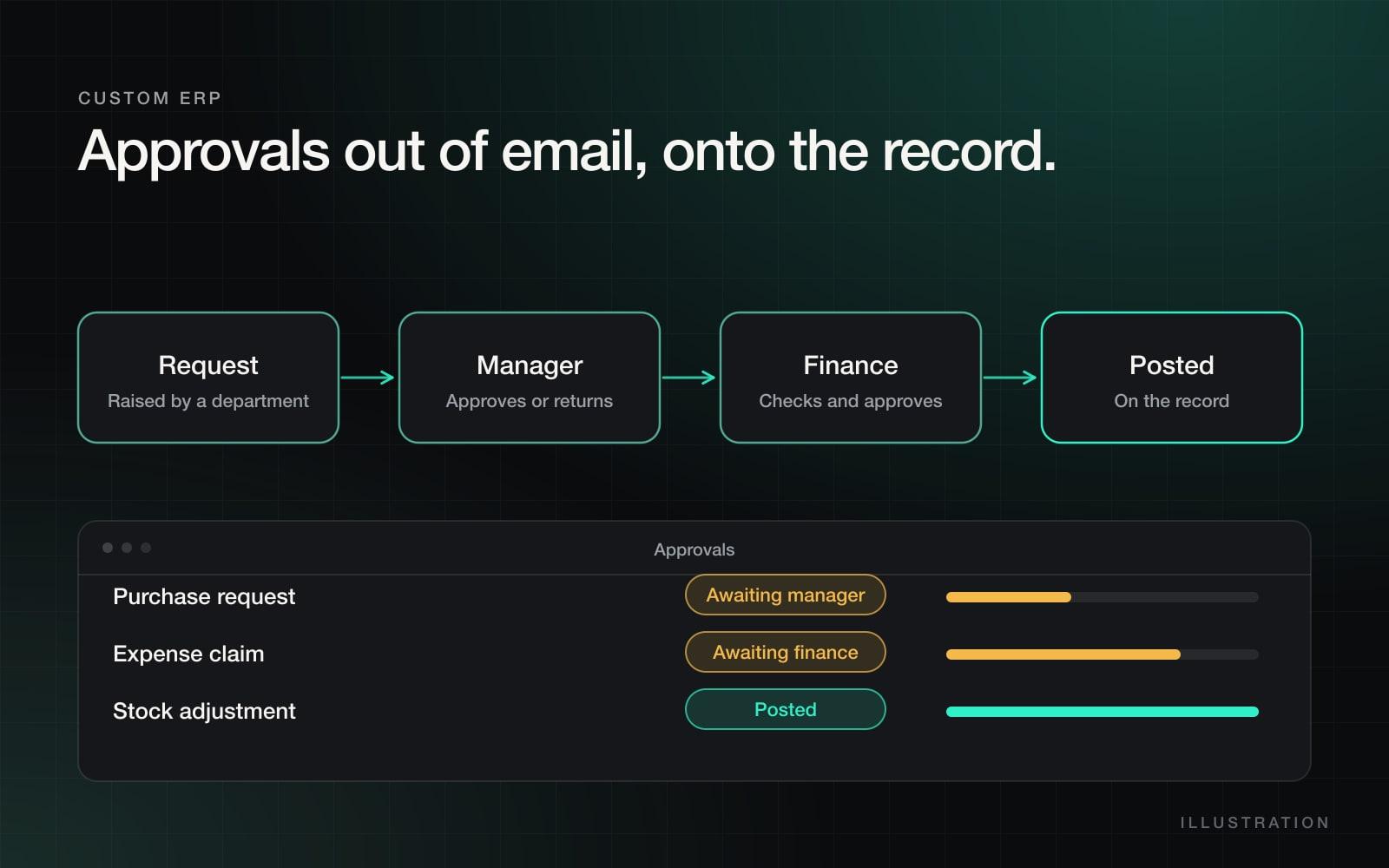
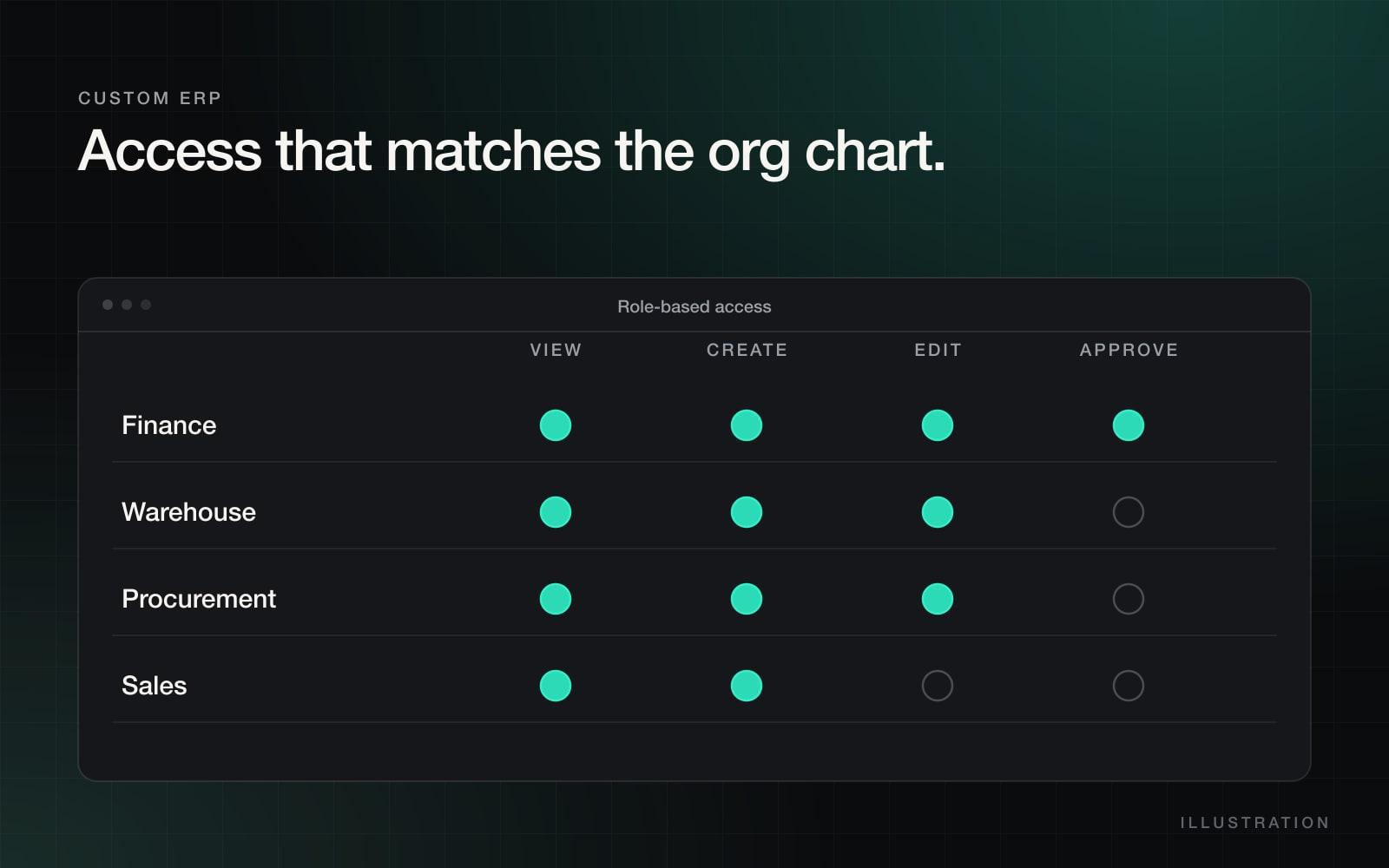
250 people now work inside one system across 18 departments. Cross-department questions are answered by opening a record instead of chasing a person, and leadership reporting runs off live data rather than a weekly re-key.
The commercial result the client reports is over $20,000 a month saved in software subscriptions, the separate tools each department had been paying for now live as modules inside one platform.
Instrument the modules that still have manual steps left in them, and route the highest-volume ones to an agent-assisted flow, the same pattern described in the AI agent case study.
Screens
Nine storefront builds for US beverage, wellness and fitness brands. Subscriptions, flavour discovery and checkout work, with the client-reported result on each one.
A review-backed agent that reads, classifies and files the records a team used to copy by hand, with a human check on anything it is unsure about.
Next step
Thirty minutes. Bring one process that keeps breaking and we will map what it would take to automate it, whether or not you hire me.