A 17-module ERP that 250 people use every day
One system replacing a decade of parallel spreadsheets at Amazify, built module by module across 18 departments without stopping the business, and maintained as their web partner for four years since.
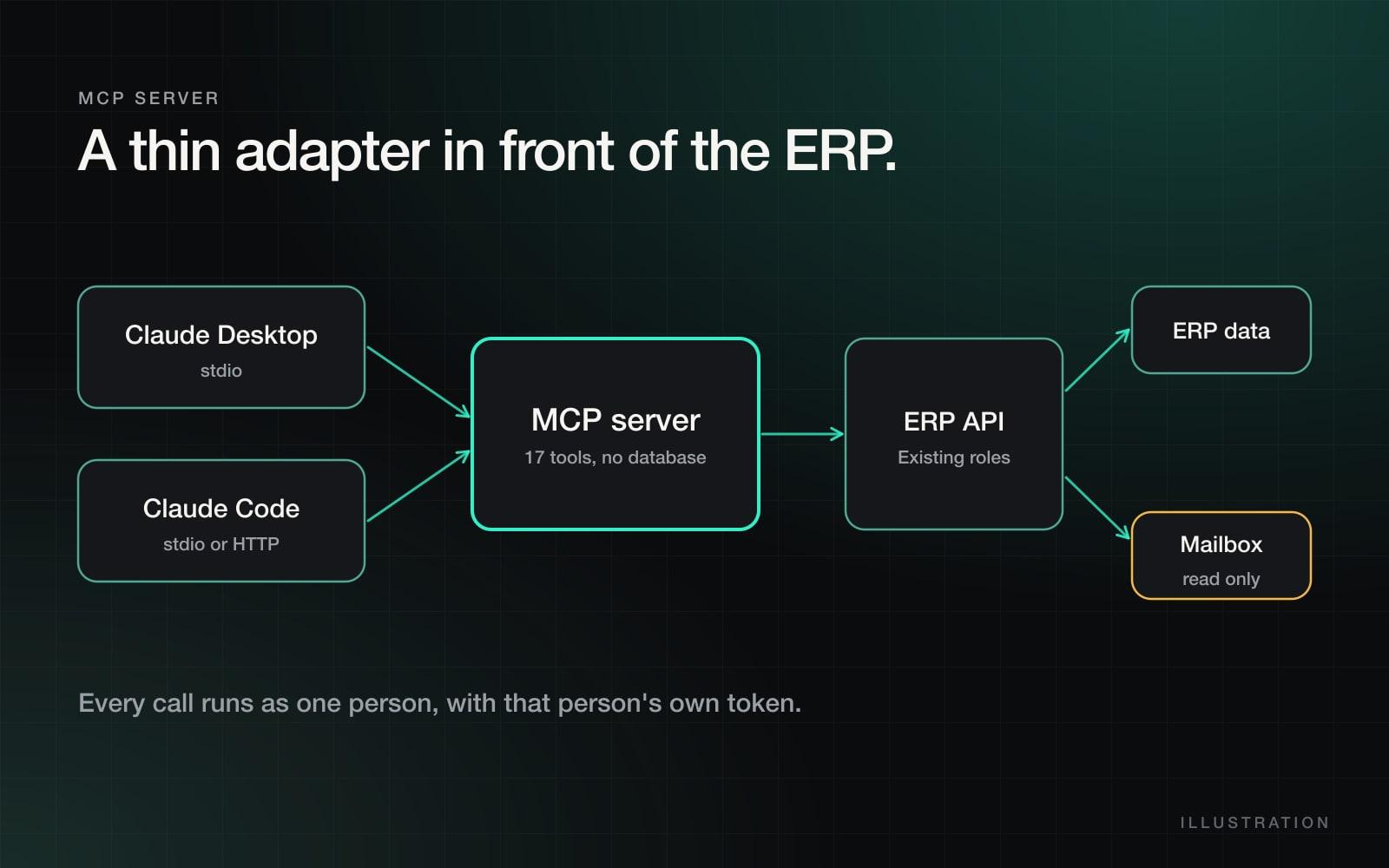
A thin adapter in front of a multi-channel e-commerce ERP: 17 tools for purchasing, inventory, finance, dispatch, mail and tasks, with no database access and no rules of its own.
Procurement and sourcing staff spent their mornings clicking through the ERP and reading supplier email: look up a supplier, find the quote, work out what needs restocking, raise the purchase order, then retype carton sizes and ETAs from an email thread into the right screen.
The ask was to let an AI assistant do the lookups and the typing, without handing it a second set of rules or a way around the ones the business already trusts.
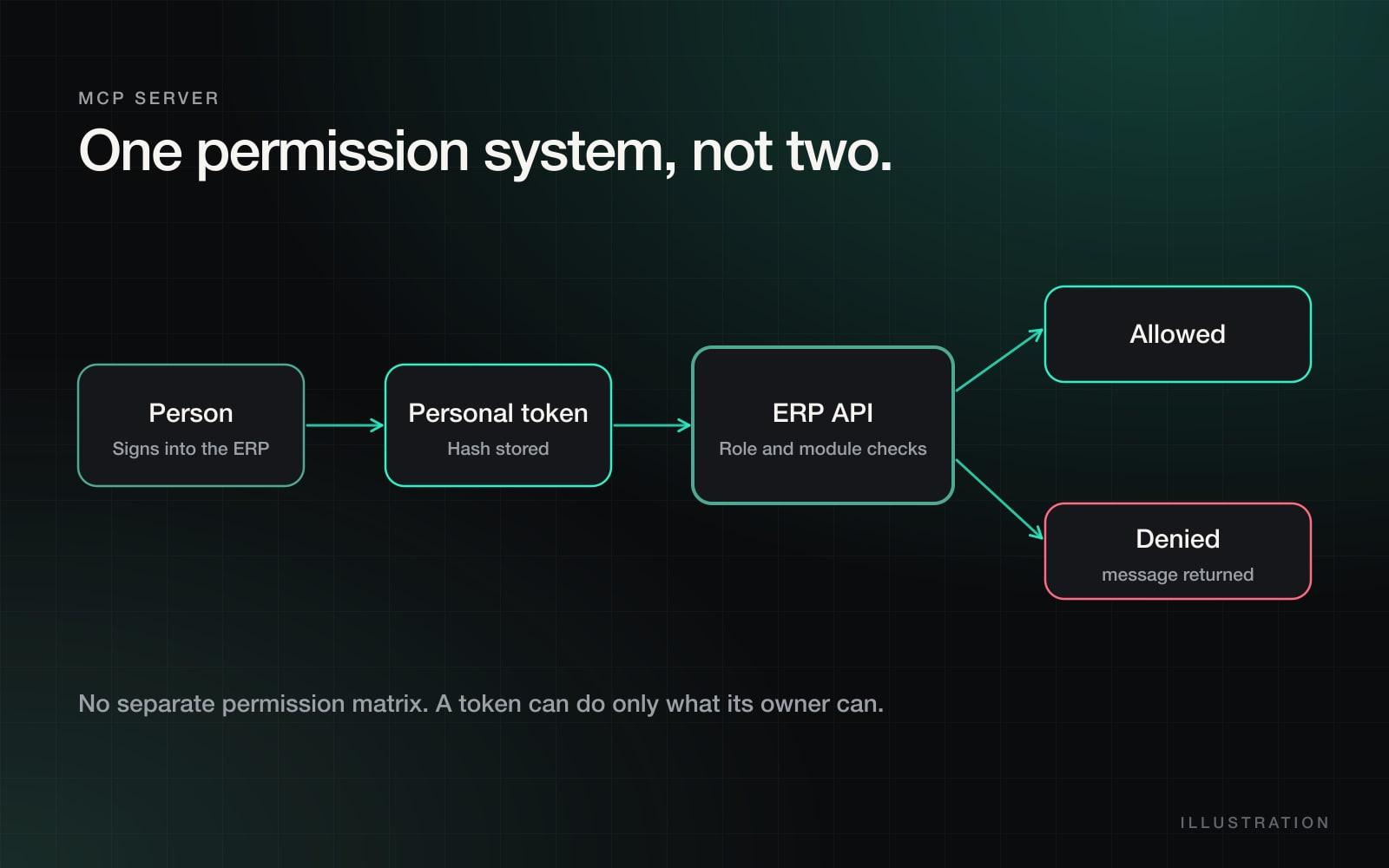
An MCP server that is deliberately thin. It holds no business logic and never opens the database. Every tool calls the existing ERP API as one person, using that person's own access token, so the API's role and module checks apply unchanged. If you cannot approve a purchase order in the app, the assistant cannot either.
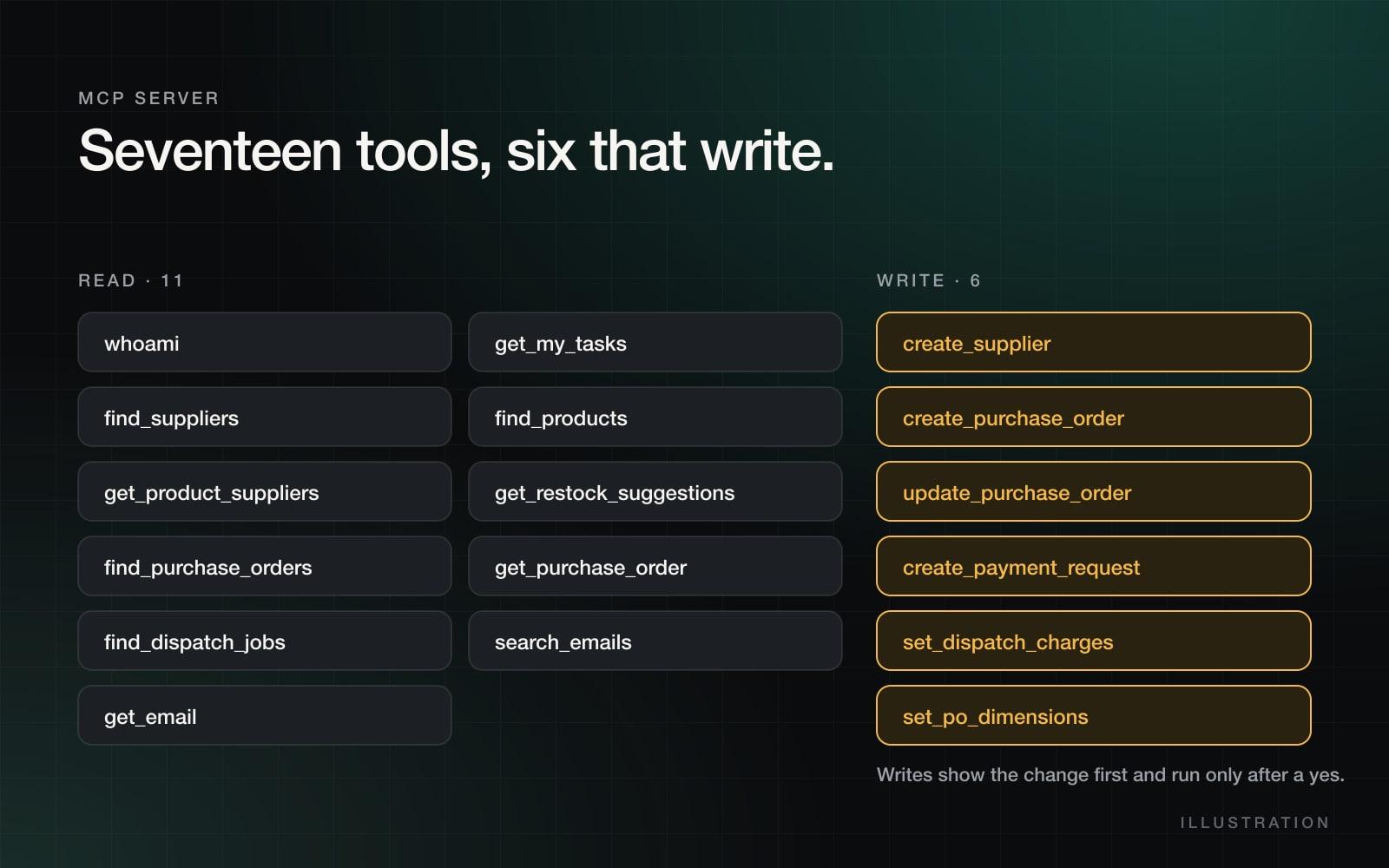
It exposes seventeen tools:
It runs over stdio for Claude Desktop and Claude Code, and over stateless streamable HTTP with a bearer token on every request. A Claude Code plugin bundles the server with instruction skills, and the same tools power an in-app chat assistant and scheduled jobs.
Fitting ERP data into a context window. The forecasting screen repeats a listing once per channel. The restock tool merges those rows, drops items with no sales or full cover, ranks the rest by cost value, and only then optionally looks up the cheapest quote and last price paid. Tasks are filtered locally, email is snippet first and body second, and identical cartons are grouped on the way out.
Three statuses behind one field. A purchase order has a headline status, an approval status and a post-approval workflow status. The tool exposes one status and lets the API fan it out exactly as the web app does.
Duplicate suppliers. Supplier names are not unique in the API. Rather than invent a constraint the system does not have, the guard is "search, then ask a person".
Ask which purchase orders to raise today. The restock tool returns critical items, already net of units on order, split into "ready to order" and "needs a price", each with the cheapest quote. Raising the PO is a separate step: the assistant shows the supplier, lines, total, currency and terms, and creates it only after a yes. A manager still approves it in the app.
A supplier replies with carton sizes in one line. The assistant finds the PO, checks whether packaging already exists, and writes it only if the card is empty and every side and unit is stated. If the email disagrees with what is stored, it reports the mismatch and leaves the data alone.
Opening forecasting and then each product's suppliers to decide what to order. Reading supplier threads for "shipped" and ETAs and updating each PO by hand. Typing one-line carton replies into the packaging card. Opening three morning reports to see what needs a decision. Opening task management for "what is overdue".
Move it to a hosted deployment, add a rate limiter on the server itself, and start recording usage so the time saved is a measurement instead of a claim.
Screens
One system replacing a decade of parallel spreadsheets at Amazify, built module by module across 18 departments without stopping the business, and maintained as their web partner for four years since.
Nine storefront builds for US beverage, wellness and fitness brands. Subscriptions, flavour discovery and checkout work, with the client-reported result on each one.
Next step
Thirty minutes. Bring one process that keeps breaking and we will map what it would take to automate it, whether or not you hire me.